

TAP President Announces Upcoming Retirement

After 35 years of service to Total Action for Progress (TAP), Annette Lewis, its current president and CEO, will retire effective March 1, 2024. Mrs. Lewis became TAP’s president & CEO in May 2015.

Mrs. Lewis states, “My journey with TAP has been an amazing one. I started as a temporary employee 35 years ago, unsure that I would be asked to remain. I am so grateful that my supervisors and TAP’s president for 40 years, Ted Edlich, decided to keep me. Working at TAP has been tremendously rewarding. I have enjoyed seeing hope return to the eyes of the families we assist and the successes they’ve achieved. I have been amazed by the work of the staff that pour their best efforts into the lives of others to support them and celebrate with them during each accomplishment. I have been richly blessed to work with an administrative staff and team of senior leaders who are among the most talented, committed professionals that I have ever had the pleasure to work with. I am indebted to a board of directors who had confidence in me, provide valuable guidance, contribute to the success of the agency, and continue to believe in TAP’s mission. With the help of each group that I’ve mentioned, TAP is strong, effective, and will make an impact across the region and state for years to come. I will remain eternally grateful for the opportunity that has been given to me to contribute to this outstanding organization.”

TAP Chairman Paul Nester expressed the Board of Directors’ “deep appreciation for Mrs. Lewis’ years of successful leadership of TAP,” and acknowledged the “numerous contributions made by Mrs. Lewis to the communities and citizens that TAP serves.” Nester further commented that the board of directors will soon begin a search for Mrs. Lewis’ replacement.  
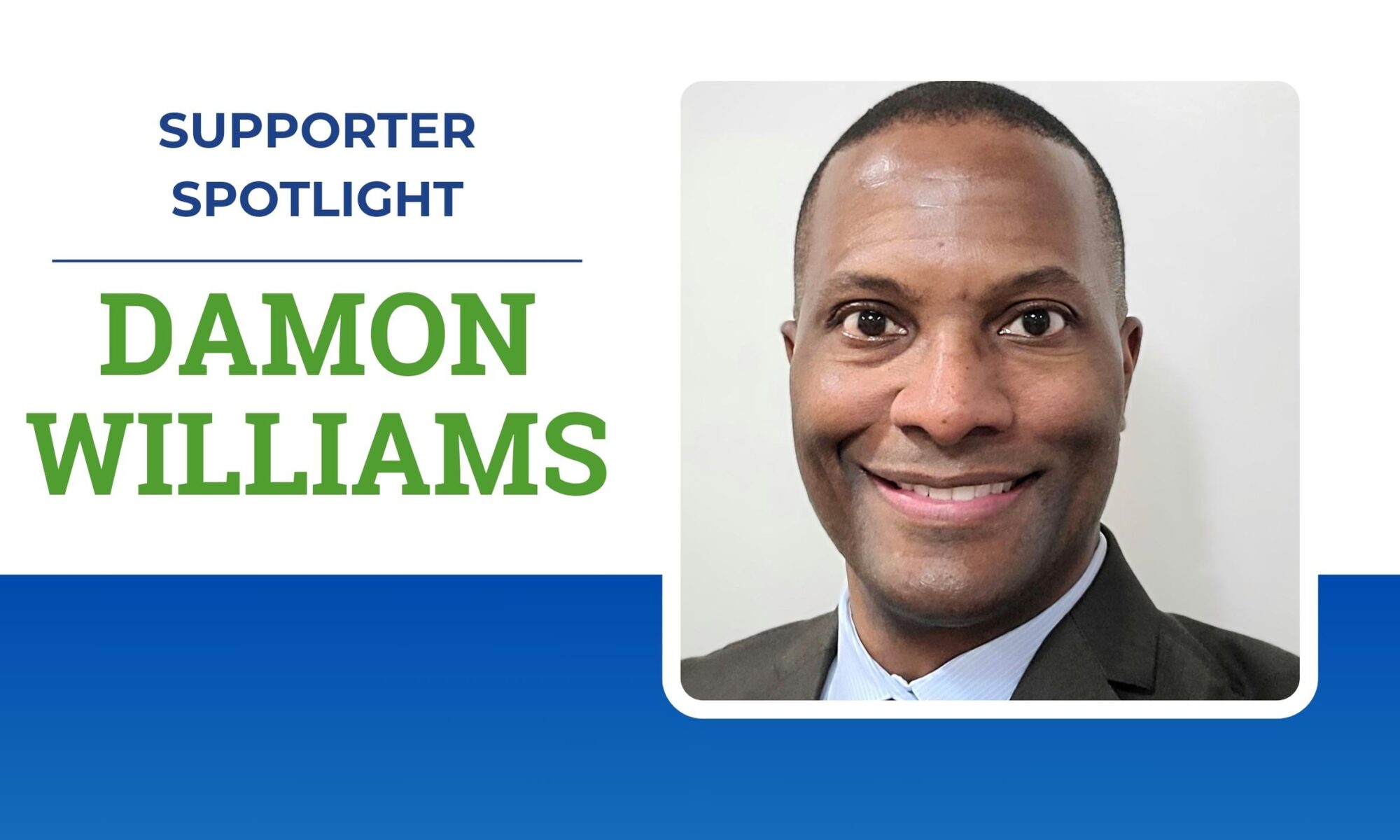
Supporter Spotlight: Damon Williams

Damon Williams joined the staff of First Citizens Bank more than 23 years ago. He says they were already supporting TAP at that time. In the last three years, though, the relationship has expanded significantly. It’s due, in large part, to a $50 million grant fund,  which provides CRA-qualified philanthropic giving through 2025. This allows the bank to distribute monies in the communities it serves. “Through this benefits plan, we were able to provide more support,” Damon says.

Homegrown and headquartered in North Carolina, First Citizens is now the largest family-controlled bank in the country. “I was born and raised in Roanoke and familiar with TAP services in the community,” Damon explains. “TAP has been around this community for a very long time.” He sought to expand the relationship between the two institutions. “It was a great fit.”

The increased giving focus began through a 2020 initiative. It’s part of First Citizens’ five-year, $16 billion Community Benefits Plan that builds on the bank’s ongoing work to reinvest in low- and moderate-income communities and neighborhoods of color. The plan focuses on three areas: community development lending and investments, mortgages, and small business loans. Through this new effort, organizations can also apply for grants to fund programs.

TAP received $25,000 this year for our free Tax Clinic after applying for a grant. The bank doesn’t just provide money for the Tax Clinic, though. Over the years, First Citizens employees have volunteered their time to help complete tax returns for those we serve. “We try to participate and give back to the community as well,” says Damon.  

He practices what he preaches outside of work as well. Damon serves on the TAP Property Committee and has been involved in our Business Seed program. “That’s given me great perspective on what they [TAP] do,” he says.  

In his spare time, Damon runs Twin Hoops with his twin brother, Ramon, as a community service. The duo started this grassroots effort 27 years ago. Services are offered year-round, including basketball training and a summer camp for children ages 7–15. Most recently, Twin Hoops has supported basketball travel teams and tournaments. “We’re open to all participants who want to improve their skill set as players but also be good people in their communities,” explains Damon. “We do not turn anyone away. We want to give every kid an opportunity to participate and enjoy a fun, structured environment around basketball. We feel basketball is a game of life, too.” This summer, 250 came through the summer camp program.

Damon is currently a business development officer with First Citizens. Prior to that he was a community development officer. “We’re proud to be a supporter of TAP and the programs they provide,” he says. “We know they do the work that we don’t see on the surface, but behind the scenes in trying to provide quality services, affordable services, and we’re proud to help support the mission that they do. Of course, they’re wonderful people to work with, too.”

An orange life saver is hanging on a white wall

How to Help Someone Who Is Experiencing Domestic Violence

Nearly one in every four women and one in seven men have experienced domestic abuse. Despite how frequently it occurs, most don’t know how to help when domestic violence happens to someone they know.

One commonly asked question is, “Why don’t they just leave?”

Most domestic violence situations are complicated by multiple factors. Abusers use fears as leverage in order to trap a survivor or limit their options. For example, a male client once told us he stayed with his abuser because he felt it would make his kids safer. He said that if she was hitting him, then he knew she wasn’t hitting their kids. To him, this was far more important than his own physical safety. Further complicating the matter, many male survivors perceive that they will struggle in court to prove that they are victims of abuse and that they should retain sole custody of their children.

Listen and empower

Each situation is different. The best thing you can do to help is to be an advocate—listen and support, offer counsel, but always remember that abuse is a form of control. Empowering survivors means encouraging them to make their own decisions. After all, they’re the ones who have to live with the consequences.

Making sure victims don’t feel alone is also important. Abusers are often able to perpetuate their abuse because they isolate their victims. Refer them to a domestic violence hotline, such as our 24/7 help hotline at 540-580-0775. You can also click here to learn more about our program for domestic violence survivors.

How to help if you think someone is in danger

Learning these facts will help you become more informed, but it’s only the first step. Research and share information about the resources in your area. Recommending specific resources and how they help can increase the likelihood of the person using those resources—it could make the difference between life and death.

If you or someone you know has been abused, TAP Domestic Violence Services has a 24/7 hotline at 540-580-0775. If you are unsure of the local resources in your region, call the U.S. National Domestic Violence Hotline at 1-800-799-7233. We can all be a source of hope.